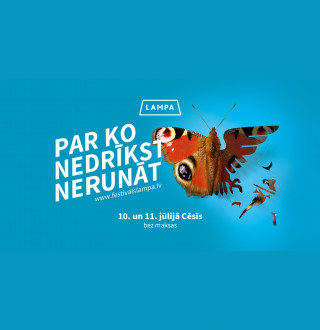
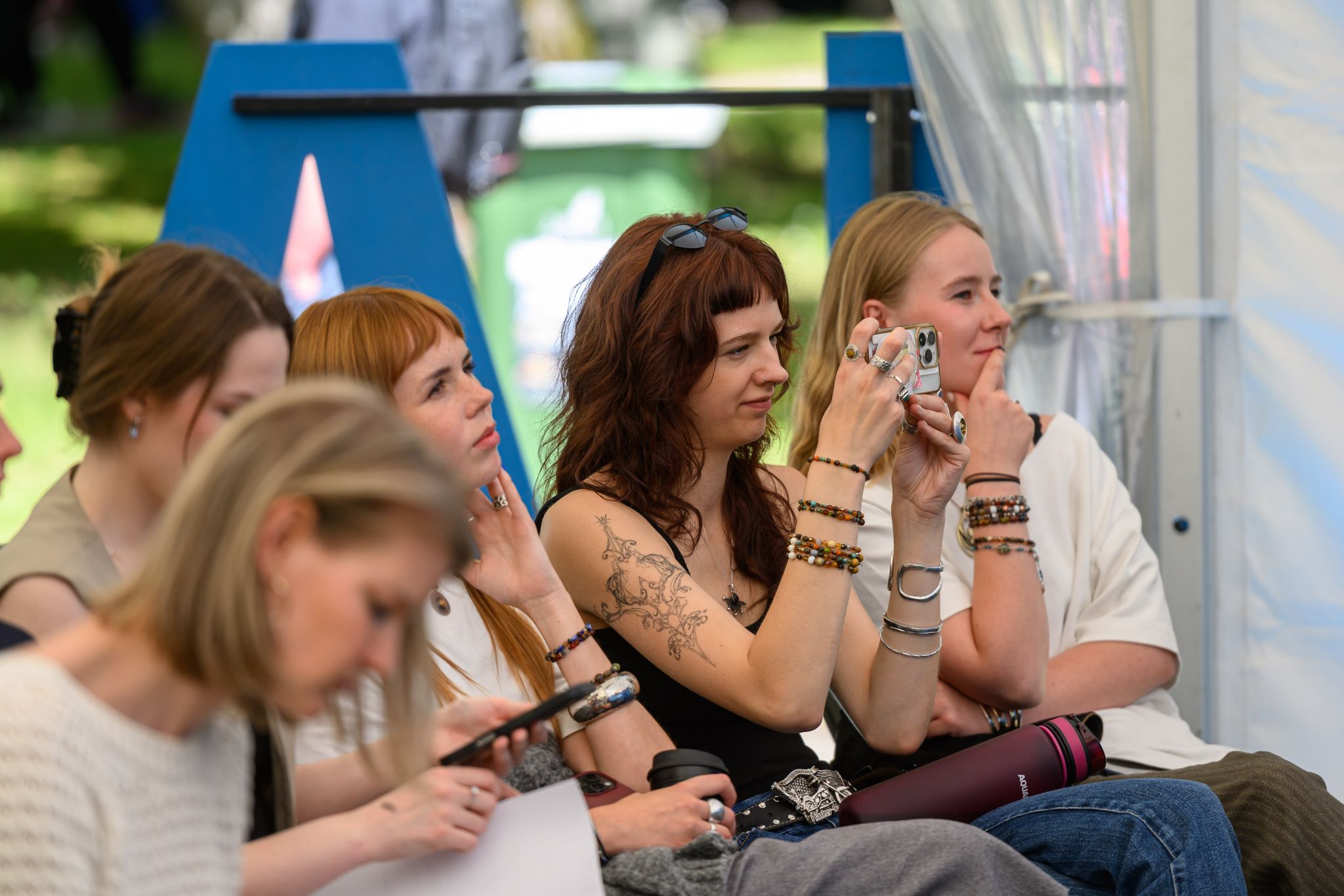
On 10–11 July, the Nordic Council of Ministers' Office in Latvia, together with its partners and all Nordic embassies represented in Latvia – the Embassy of Denmark, Embassy of Finland, Embassy of Norway, Embassy of Sweden and the Embassy of Ireland – as well as the Danish Cultural Institute in Latvia, took part in the LAMPA Conversation Festival for the twelfth time.
This year’s overarching festival theme was “What we cannot afford NOT to talk about”, encouraging open discussion on issues that are too often overlooked or insufficiently addressed in public debate. The festival attracted approximately 27,000 visitors and brought together 1,445 speakers from Latvia and abroad. At the Nordic Island stage, experts from Denmark, Finland, Ireland, Norway, Sweden and shared Nordic perspectives on some of today's most pressing societal challenges.
Organisers polled people before the festival inquiring about topics that should not be left undiscussed. Mental health was leading the poll, and it was also part of our programme – discussion on building everyday resilience and turning anxiety into action was just one of the conversations at the Nordic Island stage. The programme also explored civic participation, transport on demand as service in rural areas, energy independence, successful governance and civic engagement practices in Latvia inspired by the Nordic countries, and a range of other issues relevant to both Latvia and the Nordic region.
“This is an inspiring festival that gives space for people to engage in democratic dialogue while treating one another with respect. Respectful, informative and democratic – these are certainly the three words that best describe the LAMPA Conversation Festival.”
—Nina Hvid Enevoldsen, Director of the Nordic Council of Ministers’ Office in Latvia
This year, visitors to the Nordic Island also had the opportunity to meet Ville Väyrynen, Member of the Finnish Parliament and President of the Nordic Council. He took part in two discussions: one highlighting successful practices in Latvia inspired by the Nordic countries, and another focusing on crisis preparedness in border regions.
“It is a pleasure to be at the LAMPA Conversation Festival because it brings together many different perspectives and there is a genuine sense of public engagement. Unlike similar festivals in the Nordic countries, LAMPA is not overly politicised, and I see that as one of its greatest strengths.”
—Ville Väyrynen, President of the Nordic Council
Discussions on issues that matter
Agnese Cimdiņa, Head of Diversity & Inclusion at PwC Latvia, together with fellow panellists, discussed the extent to which our hopes and optimism about the future depend on the relationships we build and the institutions we trust and work with.
Maksis Rūdolfs Apinis, Director of the environmental NGO Green Liberty, and fellow experts explored benefits and possible drawbacks of service “transport on demand in rural areas”– a model that has already been piloted by the Vidzeme and Kurzeme Planning Regions.
Liene Valdmane, Secretary General of the European Movement Latvia, together with Karina Palkova, Ombudsperson of the Republic of Latvia, and Ieva Morica, founder of the LAMPA Conversation Festival, discussed successful initiatives in Latvia inspired by the Nordic countries. These include the LAMPA Conversation Festival itself, dialogue circles as a method for narrowing the gap between the state and its residents, the Ombudsman institution and signal elections for young people.
In a discussion moderated by Gunta Sloga, Executive Director of the Baltic Centre for Media Excellence, media professionals examined women’s participation in public life and the reasons why women are increasingly reluctant to express their views publicly. Reflecting on the increasingly hostile online environment, participants encouraged women to speak out against abuse, remain confident and continue taking part in public discussions alongside men. In another panel, moderator, environmental expert and founder of Ecosoul Arta Kauķe, focused on how municipalities can more successfully attract renewable energy projects while using these developments as opportunities to strengthen local communities and economies.
The central event at the Nordic Island this year was the Danish tradition of folkekøkken – building community through a shared meal with people connected by place rather than by family or close friendships. The Nordic culinary experience was prepared by the Michelin-recognised Cēsis restaurant H.E. Vanadziņš together with chef Edgars Rubenis. This activity gained a lot of attention, and we were able to welcome 150 people to share a meal, meet new people and have a joyful experience in the Nordic style.
Throughout the festival, two exhibitions were displayed at the Nordic Island – an exhibition on the Swedish posters on the games that have shaped the world and a photo exhibition showing the 35 years of history of the Nordic Council of Ministers’ Office in Latvia; authors: Marta Veinberga and Ilze Kalnbērziņa-Prā.
It was a pleasure to welcome everyone to the Nordic Island and to continue the conversations beyond the stage – exchanging ideas, perspectives and inspiration for future cooperation. See you at Nordic Island 2027!
Video recordings of panel discussions are available on the festival website by the appropriate panel here.
Photos: Roberts Blaubuks